
Alternate Keyword Research Strategies
You don’t have to be an SEO expert to understand the importance of performing thorough keyword research when creating targeted content for businesses. When it comes to tools that can help, there are plenty of options out there, from Google’s own Keyword Planner to SEMrush, Ahrefs, and many more, that provide valuable data on search volume, competition, and related keywords.
TL;DR: Key Takeaways
- Tools Have Limits: Standard keyword tools often lack historical data for highly niche industries or brand-new product categories.
- Roleplay the Customer: Use AI chatbots to simulate customer interactions to discover conversational, long-tail queries you might have missed.
- Monitor the Conversations: Online forums and customer reviews provide unfiltered insight into the exact phrasing your audience uses.
- Track the New Metrics: If you optimize for AI visibility, ensure you use platforms that actually track AI Overview citations and grounding queries.

Can Keyword Research Be Done Without a Tool?
What about those times when you’re working on content for a business that is particularly niche or offers a product that doesn’t have a lot of history? In these scenarios, traditional tools simply will not have access to enough historical data to provide you with data-backed recommendations.
SEO content creators need to go beyond typical tools and explore alternative approaches. Let’s take a look at some manual and modern keyword research strategies that not only help in these specific cases but also supplement traditional tool-based methods to uncover untapped opportunities.
Step 1: Start Building Your Potential Keyword Lists
Search Like The People: Start With Common Sense
Let’s start simple, how would you search? If you’ve been in the SEO game for any notable length of time, you may be a bit of a power user. So forget the search operators, shortcuts, and long-tail qualifiers, and do a little roleplaying as a typical customer. Content creators should always start with a burst of creativity and good old-fashioned common sense to reveal industry-specific terms.
Pro-Tip: Use AI for Keyword Roleplay AI chatbots like ChatGPT or Claude are excellent for brainstorming keyword ideas and analyzing search intent. You can prompt a chatbot to act as your target persona and ask it to list the questions it would have about a specific niche topic. This is a great way to generate conversational, long-tail ideas before validating them in a traditional tool.
Hang Out With The People: Online Forums and Communities
For niche businesses with limited search volume, engaging with various online audiences is an invaluable resource. Some of these audiences may include:
- Theme-specific Reddit groups
- Online forums and communities
- A company’s own help or support site
- Social media groups
These places offer direct interactions with the target audience, providing insights into their language, terminology, and specific pain points. But be careful to just observe: these communities are usually not a good place to ask marketing-related questions.
Listen to The People: Get Some Customer Feedback
If possible, conduct interviews or surveys with existing customers to gather in-depth insights into the search terms they use. The next best option is talking to members of your sales team to see if they can provide insights on common questions or hurdles. Last but not least, check review sites to see how people discuss your products or services to ideate potential keywords.
Shop Like The People: Analyze Competitors
Competitor analysis is always an excellent method to gain inspiration. By checking out competitor websites, you can identify the types of keywords they target, the topics they cover, and the depth of content they create.
Step 2: Let’s Get Some Validation
Google’s Suggested Searches
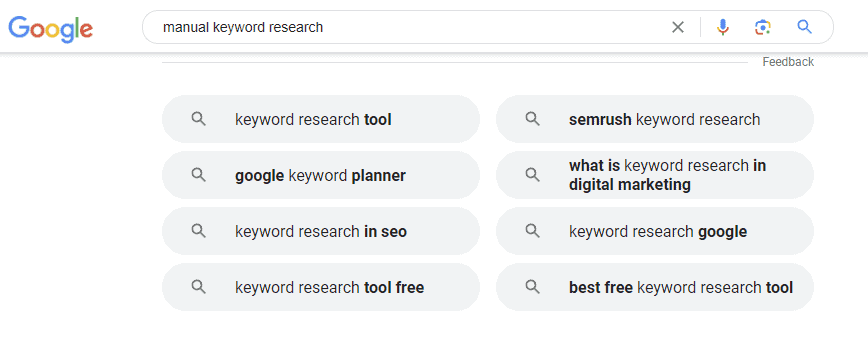
Take some of those “common sense” terms and start Googling (or Bing-ing). A search engine’s “suggested searches” and autocomplete features can provide a treasure trove of information based on real-time search queries.
Are You Asking The Right Questions?
Google’s “People Also Ask” (PAA) shows users related questions based on their initial search query. By reviewing these, you will better understand user intent and can identify areas where you can provide content to address the precise needs of your target audience.
What’s Trending Right Now?
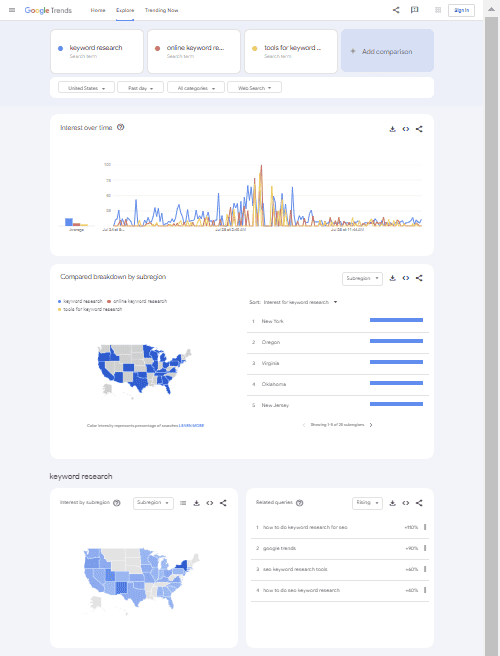
Google Trends helps identify trends over time. Even though it won’t give you exact numbers, you can use it to:
- Understand the seasonality of certain keywords
- Compare several keywords for differences in performance
- Gather regional insights
- See related queries to your target keywords
Step 3: Refining Your Lists With a Few Best Practices
Focus on Long-Tail Keywords
Niche businesses may not garner large potential keyword pools, but they can leverage the power of long-tail keywords. These keywords may have lower search volumes, but they often have high intent and can be extremely valuable for driving highly qualified traffic. By addressing these specific queries, you attract a more relevant visitor who is likely to have better engagement on your site.
Incorporate Localized Keywords
For businesses with a regional focus, be sure to incorporate geo-specific keywords. This ensures your content is seen as relevant to local searchers, increasing the chances of driving qualified traffic.
Track Your New Visibility
If you are optimizing for long-tail, conversational queries, traditional rank trackers might miss the mark. Be sure you are utilizing modern tools to measure your success. For example, Ahrefs offers an AI Overviews Tracker to see which pages Google cites for your queries, and Bing Webmaster Tools includes an AI Performance Report that shows the exact grounding queries your content appears for in Microsoft Copilot.
Good keyword research is at the core of effective SEO strategies
By combining personal insights, AI roleplay, competitor analysis, customer engagement, and some good ol’ legwork, you will enhance your research efforts and optimize your content to build unmatched topical authority that maximizes organic search visibility.
Ready to put together a set of keyword themes and topics to create content that works for your audience? Let Hive Digital help you craft a strategy that drives real results.
*This article has been updated with new information for 2026